

Reflections on Phalanx: Revival and the notion of Heritage
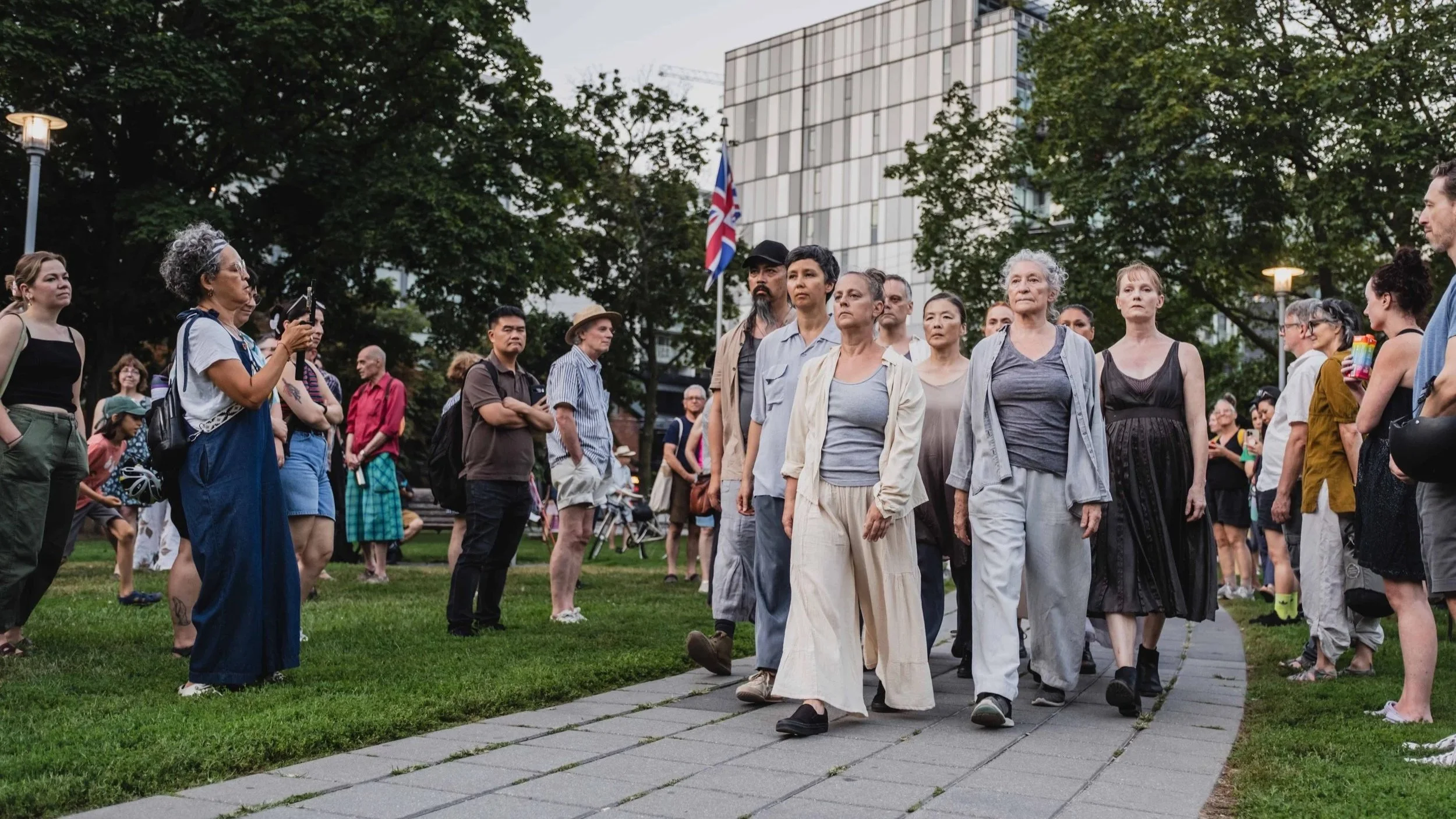
Photo Credits
It has been just over a year since Phalanx: Revival took to the streets of Toronto at the SummerWorks Festival. Today, we are honoured to share that the project has been nominated for a Heritage Toronto Award in the Public History division.
As many of our Moonhorse friends know, last summer brought a truly special performance revival to the streets of Toronto. With the blessing of DNA Theatre, fellow original cast member Louis Laberge-Côté and I, Allison Cummings, brought together a wonderful and motley crew of veteran Toronto artists to revive Phalanx, a piece, originally created in 1998 by Cathy Gordon and the late Hillar Liitoja—Toronto's unforgettable enfant terrible. Remounting this iconic street intervention allowed us to honour their artistry and celebrate the radical vision and history of our local performance makers and artists.
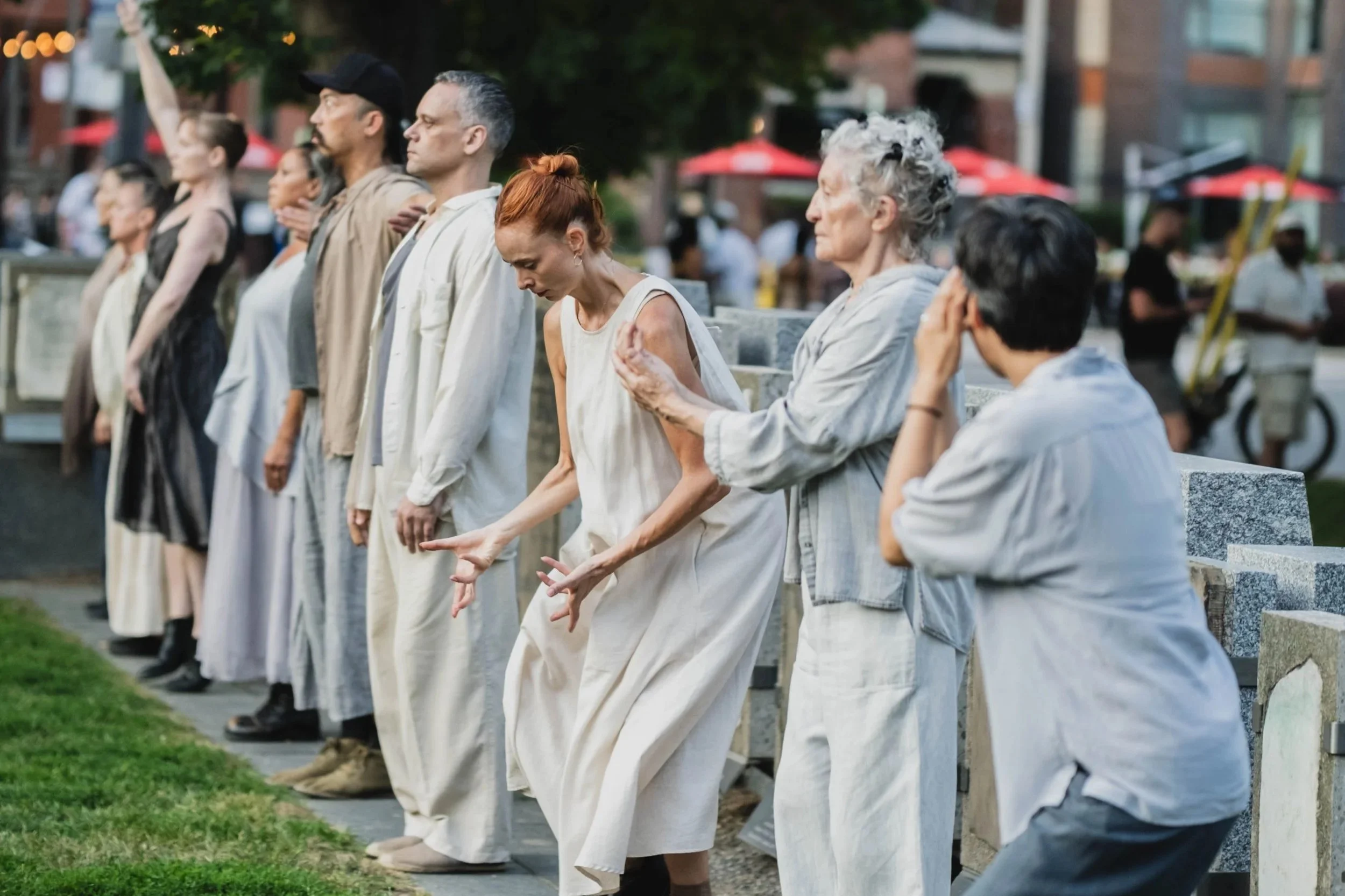
Phalanx is a durational, site-specific ambulatory performance piece involving various public disruptions.
Commencing at Victoria Memorial Square Park in downtown Toronto, it gathered audiences of more than 200 people and led them on foot through the streets and alleys of the historic downtown King and Bathurst neighbourhood...from St. Mary's Parish through the King–Bathurst intersection to The Factory — reanimating many of the landmark sites of the original premiere twenty-five years ago, and ending up in the courtyard of SummerWorks venue, the Factory Theatre.
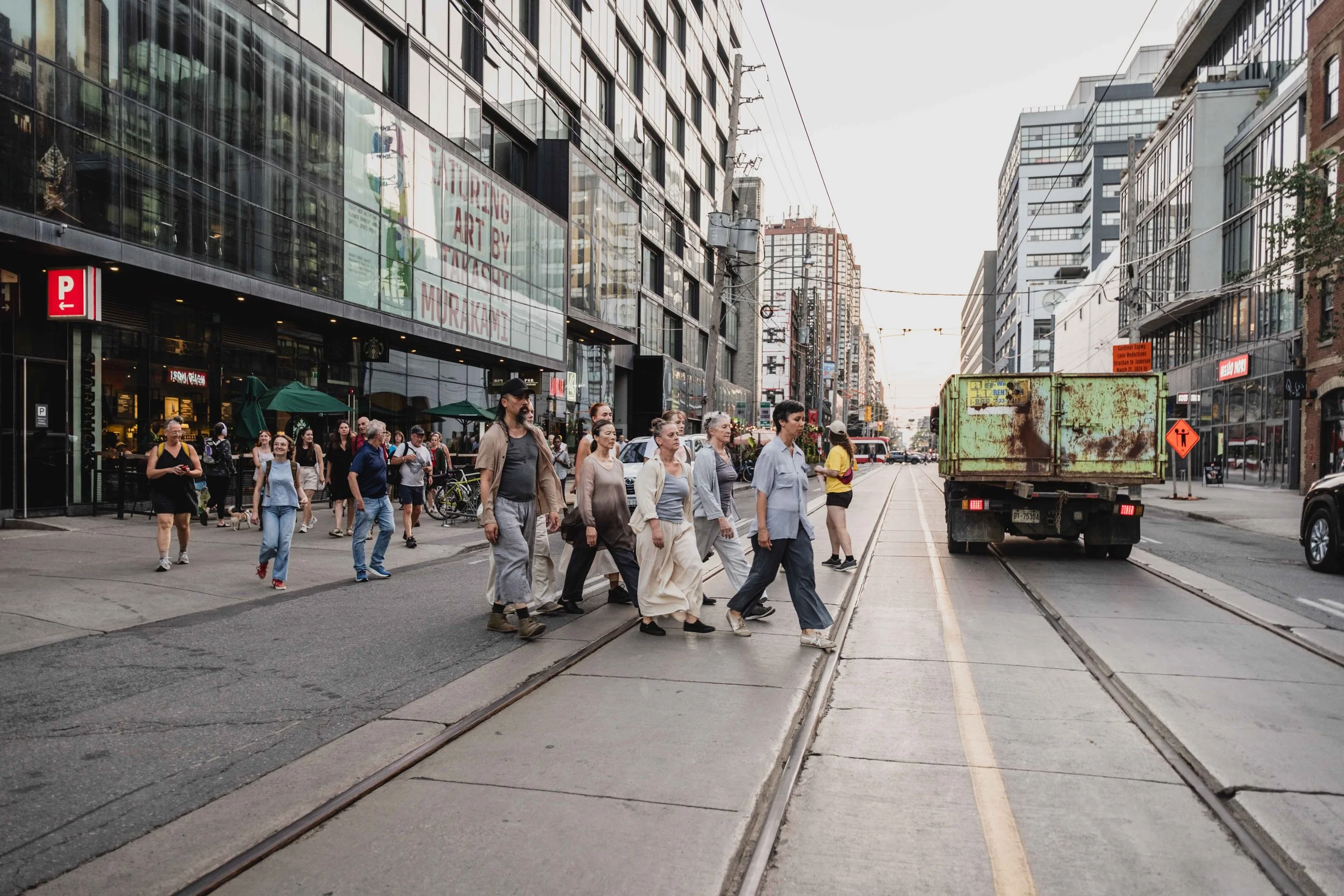
Phalanx: Revival interlaces Toronto's rich cultural heritage through three interwoven threads: site, body, and method.
Nestled in the heart of Toronto's west end, this revival traces the path of the 1998/99 original, now twenty-six years later, amidst waves of gentrification. In the late nineties, the route traversed vacant lots, quiet street corners and passageways; today, these landmarks have given way to towering condos, high-end restaurants, and bustling intersections. Returning to this neighbourhood — once Liitoja's home on Bathurst near Queen Street — rekindles the streets as living archives of a fading artistic ecosystem, where history and memory seamlessly entwine.
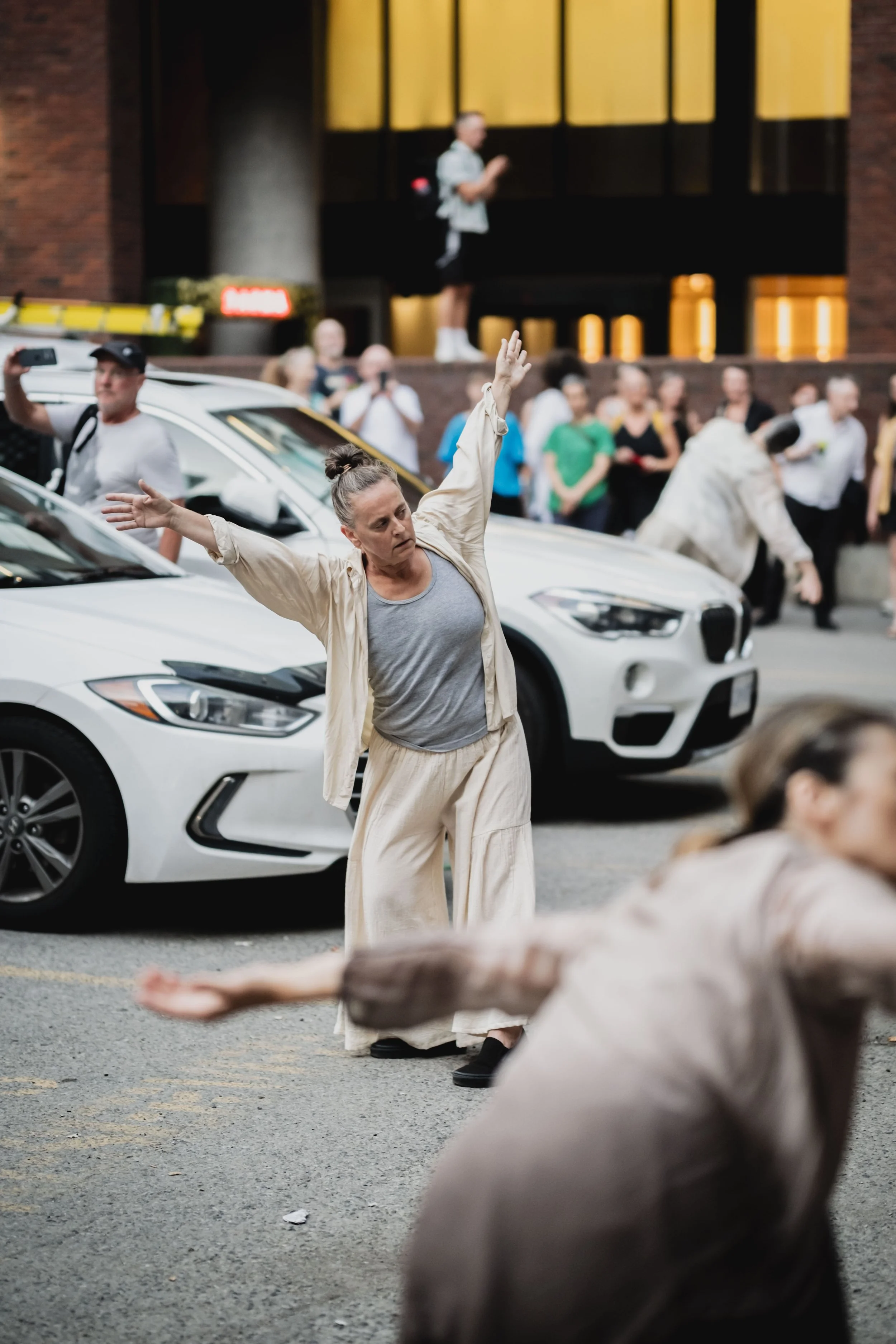
To be honest, I — Allison — was unprepared for how emotional it would be to learn of our nomination for a Toronto Heritage Award in the Public History division.
It feels tricky to write these thoughts down. Tricky because of the personal nature of the piece and how it fit into the beginnings of my professional life. Encountering DNA Theatre, and the circles of radical experimental artists surrounding the company in 1998, ultimately shaped my early artistic life through art, collaborations and deep friendships. My personal history embedded into a work and time that is at great risk of erasure, is now being given the gesture of recognition allowing it to embrace its significance in Toronto’s landscape. This nomination has found me in deep gratitude for how each artist in this city has helped shape a communal voice, a culture and an identity that is unique to these streets, landmarks and intersections. Each of us, a thread in a rich tapestry of artistic vision whether individually recognized outside our circles or not.
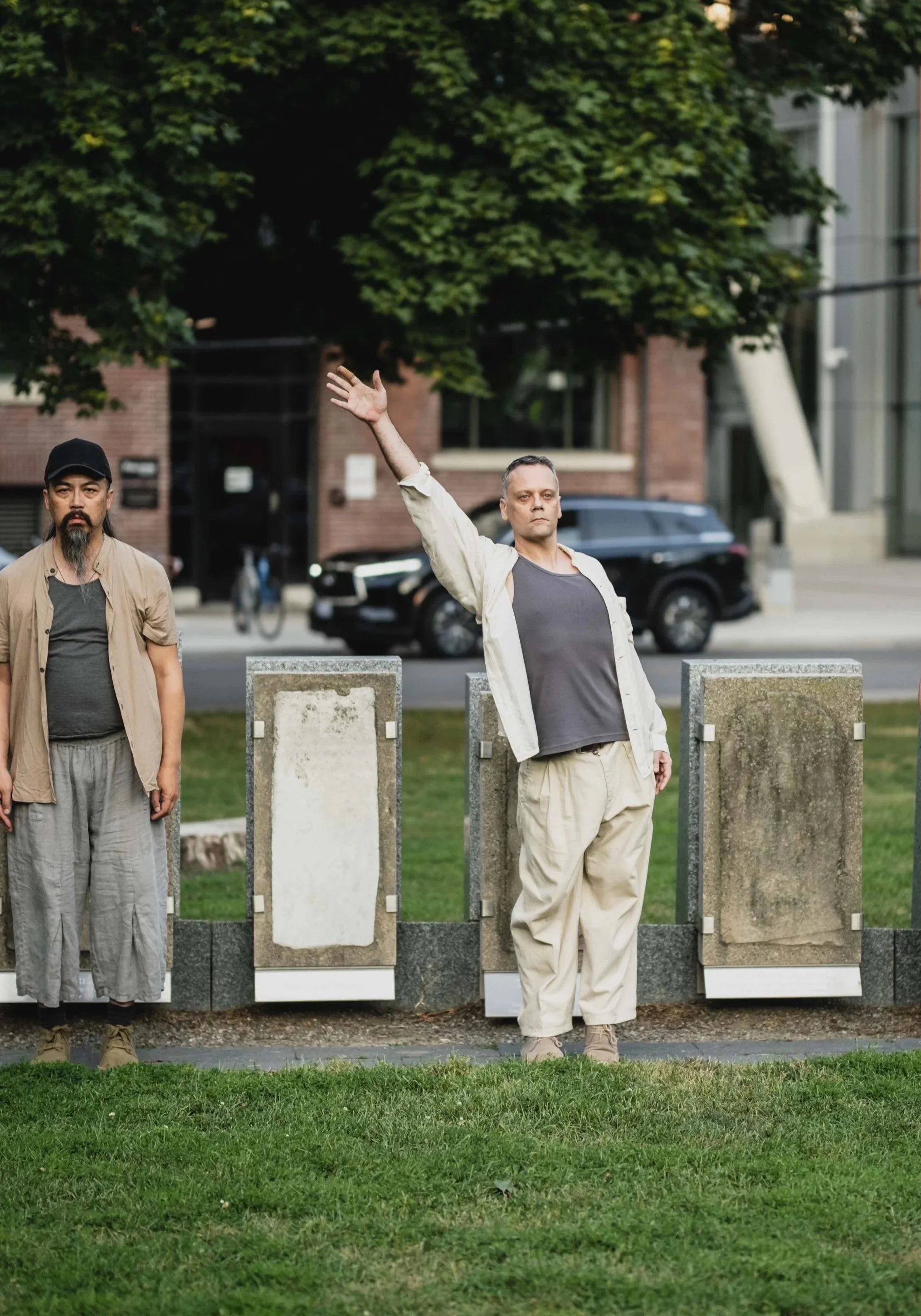
For me — Louis — the story lives in the body.
I performed in Phalanx in 1999 as a young artist at the brink of a career I could not yet picture, finding my way into this city's daring and demanding performance scene. Twenty-six years later, when Allison and I decided to return to the work, with limited access to written or video recordings of the original choreography, what I found instead was memory in the dancing itself. The work came back to us passage by passage, and we reconstructed them from what our bodies had kept. I know how quickly a history like this one disappears when no archive holds it — and how remarkable it is that the archive was, all along, our bodies and our friendships.
Phalanx: Revival was a contemplative homage to a piece and a time when we, the performers, stood at the brink of our careers — when everything seemed magical, dangerous, and possible, and we sewed ourselves into the fabric of Toronto's eclectic and exciting performance scene, each in our own way.
As the mandate of Moonhorse is to elevate the work of artists who have dedicated their lives to the development of their craft, this inclusion in our city's heritage speaks directly to our desires. Knowing that our histories have made an impact encourages us to keep on evolving and keep pushing the envelope.
To have played a role in the recognition of DNA Theatre and the work of Hillar, Cathy and all of those wild, radical artists of the 80’s and 90’s as part of Toronto’s heritage means even more. The 1998/99 productions captured a fleeting moment in Toronto's experimental performance landscape — an era largely undocumented, one that contemporary scholarship acknowledges as a gap in the preservation of recent performance legacies.
The inclusion of this work in the Toronto Heritage Awards confronts the very real notion of ageism and erasure, placing a Toronto brimming with unbridled rebelliousness, and unwavering vision on our collective map forever.
Moonhorse Dance Theatre is humbled and grateful for the acknowledgement by Toronto Heritage. And we are deeply thankful to everyone who supported us and came along the path with us — audiences, collaborators, friends — through the 2025 revival of Phalanx.
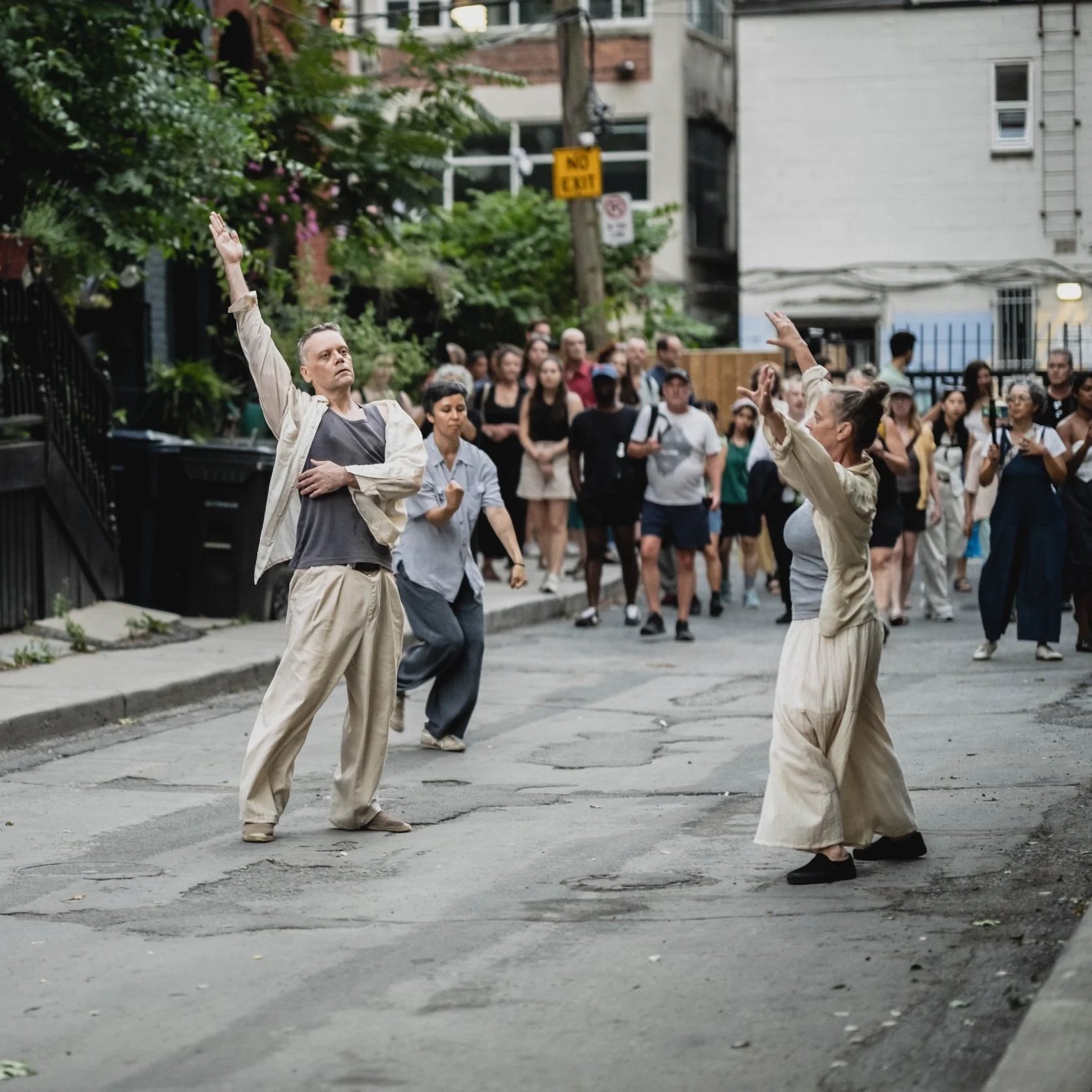
Co-Revivalists
Allison Cummings (Moonhorse Dance Theatre) & Louis Laberge-Côté
Allison Cummings - Co-Revivalist/Performer
Louis Laberge-Cote - Co-Revivalist/Performer
Tara Butler - Performer
Bonnie Kim - Performer
Coman Poon - Performer
Nicola Pantin - Performer
Tina Fuschell - Performer
Bee Pallomina - Performer
Viv Moore - Performer
Wendy White - Costume Designer
Chad Dembski - Stage Manager
Summerworks Festival - Presenter